The flooring industry is entering 2026 with a blend of cautious optimism and strategic adaptation. As homeowners and commercial developers navigate a shifting economic landscape, the demand for high-quality, sustainable, and aesthetically pleasing flooring solutions remains robust. This report summarizes the key findings in news, trends, and regulations for the wood and resilient flooring sectors.
Market Outlook and Industry News
The 2026 outlook for the wood flooring industry is generally positive, with nearly 60% of businesses expecting stronger sales compared to previous years. However, this growth is tempered by factors such as high interest rates and a projected slowdown in remodeling activity, according to the Leading Indicator of Remodeling Activity (LIRA).
In the resilient sector, the category continues to demonstrate its “resiliency,” holding steady even as other flooring types face steeper declines. The market is increasingly dominated by domestic manufacturing as companies seek to mitigate the risks associated with global supply chain volatility.
Key Trends for 2026
1. The Return to Nature
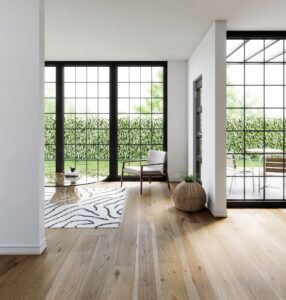
Consumers are moving away from the gray and cool tones that dominated the last decade. Instead, warm wood tones, natural textures, and matte finishes are taking center stage. White oak remains the top choice for domestic hardwood, while brown and honey tones are seeing a significant resurgence.
2. High-Performance Resilient Solutions
In the resilient category, Luxury Vinyl Tile (LVT) and Stone Plastic Composite (SPC) continue to evolve. The focus for 2026 is on digital realism—products that not only look like real wood or stone but also mimic their tactile feel. Waterproofing remains a standard requirement, with oversized planks and herringbone patterns trending in both residential and commercial spaces.
3. Sustainability as a Standard
Eco-friendly materials are no longer a niche preference; they are the industry standard. There is a growing demand for products with high recycled content, as well as rapidly renewable materials like cork and bamboo.
Regulatory Landscape and Trade Policies
Formaldehyde Standards (TSCA Title VI)
A major regulatory update occurred in early 2026. On February 6, 2026, the EPA proposed updates to the Formaldehyde Emission Standards for Composite Wood Products under TSCA Title VI. These updates aim to align federal standards with the latest voluntary consensus standards and introduce new quality control test methods, such as laser absorption spectroscopy, to ensure lower emissions and better indoor air quality.
Tariffs and Trade Uncertainty
Tariffs remain a significant concern for the industry. New trade actions in late 2025 and early 2026 have seen tariffs of up to 20-25% on certain imported hardwood, laminate, and plywood products. This has led many manufacturers to increase prices, shift to domestic suppliers, and increase inventory levels to hedge against future policy changes.
Conclusion
For 2026, the flooring industry is defined by a shift toward domestic stability, sustainable innovation, and warmer, natural aesthetics. While economic headwinds like interest rates persist, the industry’s focus on regulatory compliance and high-performance materials ensures it remains a vital component of the modern built environment.